Think better
Do you want an AI that thinks for you, or one that helps you think better?
GliderCell · Co-Creative Intelligence & Cognitive Sovereignty
GliderCell produces human-centered AI dialogue systems that amplify your intelligence, creativity, and sense of discovery—while keeping the work of learning, judgment, and meaning-making in your hands.
Instead of handing you conclusions from a black box, GliderCell uses Socratic dialogue to reveal blind spots, strengthen cognitive sovereignty, and help you discover what you could not yet see.
The Socratic inquiry
Think better
Do you want an AI that thinks for you, or one that helps you think better?
Protect agency
Are you protecting your cognitive sovereignty—or letting standard algorithms guide decisions down paths you didn’t choose?
Find the unknown
If you don’t know what you don’t know, how can you tell whether an AI is giving you the right answer?
Audit thought
What if your tool helped you catch hasty generalizations, confirmation bias, and emotional loops in real time?
Train for you
What if an AI learned your values, humor, strengths, and mental models without replacing your judgment?
What is Co-Creative Intelligence?
It is the intentional synergy between a person’s lived intelligence and a machine’s ability to synthesize—designed so the dialogue returns more agency than it consumes.
Deliberate pauses that test assumptions before a plausible answer hardens into a hasty conclusion.
Gentle identification of logical fallacies, emotional bias, and unexamined premises in written thought.
A response rhythm that adapts to emotional tempo, cognitive load, and a person’s present learning edge.
The machine scaffolds discernment and growth rather than training the person into technological dependence.
Live lab · Z.7 Supra
Bring something genuinely unresolved. Z.7 begins with a clean slate, senses the logical and emotional cadence, then asks one unexpected Socratic question at a time. When thought stalls, it moves sideways rather than supplying a generic answer.
See annotated dialogue samples →Demonstration environment. Z.7 shows how a Socratic AI partner can support learning and decision-making at work. Please don’t enter confidential company, client, or personal information.
Fit
A thinking partner for the moments an answer machine flattens—before the meeting, during the rollout, and at the learning edge.
A practice partner during AI upskilling programmes: participants learn to ask better questions, not just get faster answers.
Stress-test a recommendation before the meeting: what it rests on, what's missing, and what someone will ask.
Check drafts, summaries, and reports for unsupported claims and weak reasoning before they circulate.
Turn technical findings into plain language and analogies for executives, boards, and other departments.
Help new managers and staff think through unfamiliar situations at a pace that matches their experience.
A bolder, more theatrical Socratic partner for entrepreneurs, solo founders, creatives, coaches, visionaries, and independent thinkers who want to be challenged. Napoleon Wozniak runs on Poe, a public AI platform, and is intended for personal and independent use.
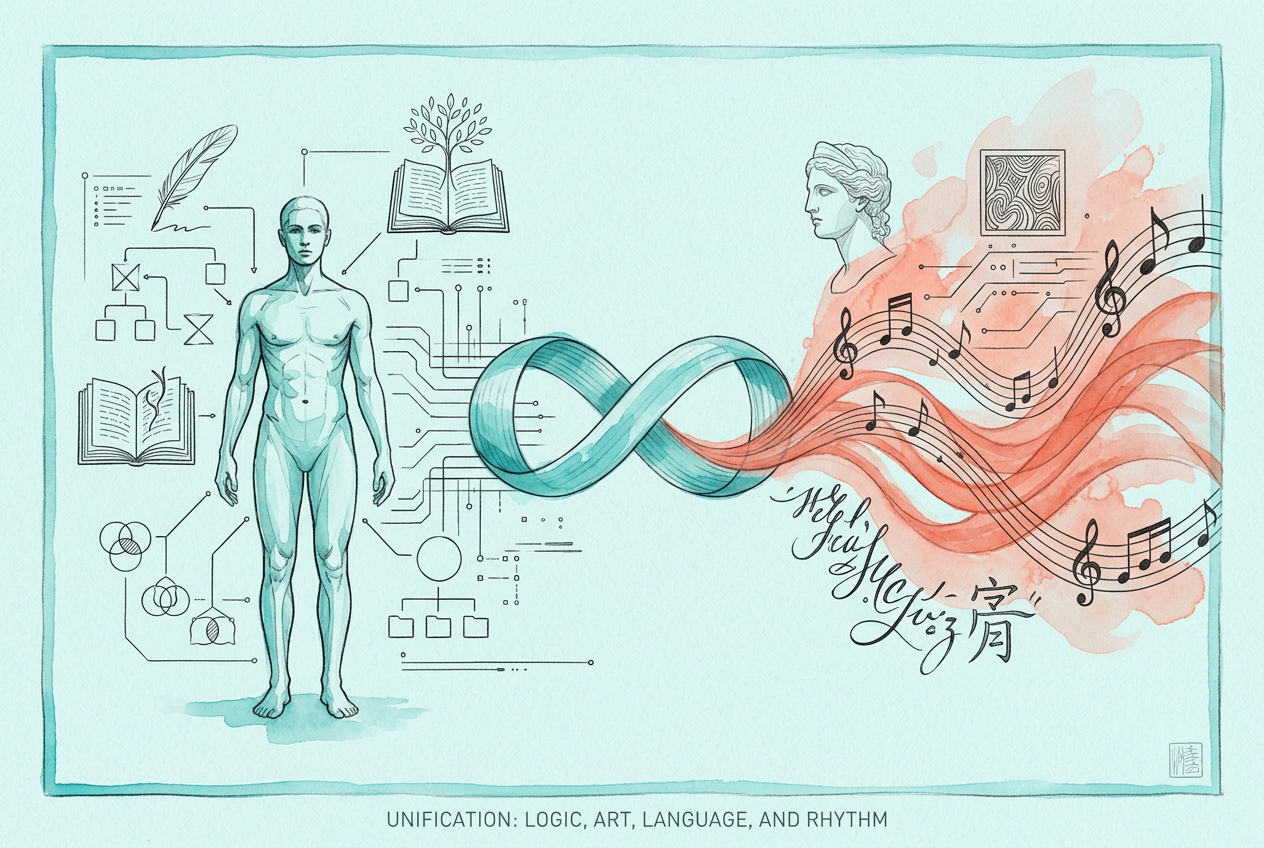
For helping professions & innovators
For coaches, psychologists, educators, counselors, and community builders, co-creative dialogue engines can guide reflection between sessions, elevate first-principles reasoning, and preserve warmth, ethics, and nuance while extending access.
Services & pricing →Working prototypes & labs
01 / Flagship · live demo
The Co-Creative Dialogue Engine: a Socratic meaning architect and discernment protocol for complex problem-solving. Running live on this site.
02 / Z.7's cousin · on Poe
A bolder, theatrical Socratic partner for entrepreneurs, founders, creatives, and independent thinkers. Hosted on Poe.
Visit on Poe ↗
03 / Co-creative system
A guided intake becomes a written narrative, the model then interrogates that narrative from several angles, and the result breaks into a ladder of small steps and a vision board. A real privacy fork up front: stealth for the tab only, or save on this device. No account, no email, no database.
Ben Smith's vision, adapted and built by Lee Chazen (with support from Claude AI, Claude Code, Gemini Notebook and Lovable AI).
Experience it →
04 / Behavioral coach
Built with a PhD psychotherapist to train people on EFT tapping: somatic holding space, a Socratic reframe before any script, a live meridian map, and 0–10 check-ins folded back into each round.
Experience it →
05 / Character bot
A future-self dialogue companion designed to make long-term thinking feel personal and immediate. Uses voice, constraint, and reflection to turn goals into conversation.
Experience it ↗
06 / Learning tutor
A study and retrieval coach built around spaced repetition, elaboration, and the emotional moment when a learner realizes they do not actually understand something.
Experience it ↗
07 / Media literacy
A tool that analyzes the slant of an article. The design problem was defensiveness: the tone had to stay neutral and inquisitive while challenging a source the reader trusts.
Experience it ↗
08 / Simulation
A geopolitical learning game built in under five weeks, generating 400+ curriculum-aligned scenarios on a recursive dialogue system. Average session: about thirty minutes. Falling Walls finalist, top 70 of 1,000+ entries.
Experience it ↗Join the co-creative movement
Integrate Co-Creative Intelligence into your organization, build a custom dialogue app for your practice, or explore intentional human-AI collaboration for your community.
Contact: lee@glidercell.com